

10 Creative Ways to Engage Students During Online Music Lessons
Published · Updated
Explore innovative strategies to keep students engaged and motivated during online music lessons, enhancing their learning experience.
Engaging Students in Online Music Lessons
Transitioning from in-person to online music lessons presents unique challenges, particularly in maintaining student engagement. However, with thoughtful planning and creativity, online lessons can be both effective and enjoyable. Here are ten strategies to help you engage your students during online music lessons:
1. Leverage Educational Apps
Utilize apps like Sonatico to reinforce learning concepts or provide a brief change of focus during lessons. These tools offer interactive features that help students stay focused and motivated. Apps can be used independently by students or integrated into the lesson via screen sharing.
2. Review and Reinforce Pieces
Encourage students to review previously learned pieces. This not only refreshes their memory but also allows them to showcase their progress. To keep it engaging, turn reviews into games by memorizing lines or altering the piece's style.
3. Encourage Questioning
Ask students to jot down questions about a new piece. This encourages them to analyze the music more deeply and prepares them for meaningful discussions during lesson time.
4. Share YouTube Performances
YouTube is a valuable resource for demonstrating musical pieces performed by various artists. Sharing these videos can inspire and motivate students to improve their skills.
5. Flashcard Speed Tests
Keep flashcards handy for note recognition speed tests. Regular practice aids in developing quick note-reading abilities, crucial for musical development.
6. Use Worksheets for Theory and Rhythm
Send printable worksheets before lessons to incorporate theory and rhythm exercises during sessions. With Sonatico's integrated tools, you can easily share materials with students without switching between platforms.
7. Rhythm Clapping Exercises
Have students clap and count rhythms aloud. This exercise helps them internalize timing and rhythm, enhancing their overall musicality.
8. Color-Coding Musical Elements
Use colored pencils or Sonatico's digital tools to highlight musical elements on sheet music, making learning interactive and fun.
9. Role Reversal: Student as Critic
Play a piece with intentional mistakes and let the student identify errors. This role reversal is engaging and helps develop critical listening skills.
10. Transform the Piece
Ask students to play a piece differently by altering octaves, dynamics, or even transposing it. This not only checks their understanding but also teaches adaptability and creativity.
The transition to online teaching can be an opportunity rather than a limitation, allowing teachers to discover new ways of connecting with students and fostering their musical growth. Embrace these strategies, adapt them to your style, and enjoy the rewarding experience of teaching music online.
Related articles
Silent Communication in Online Music Lessons (Without Interrupting the Student)
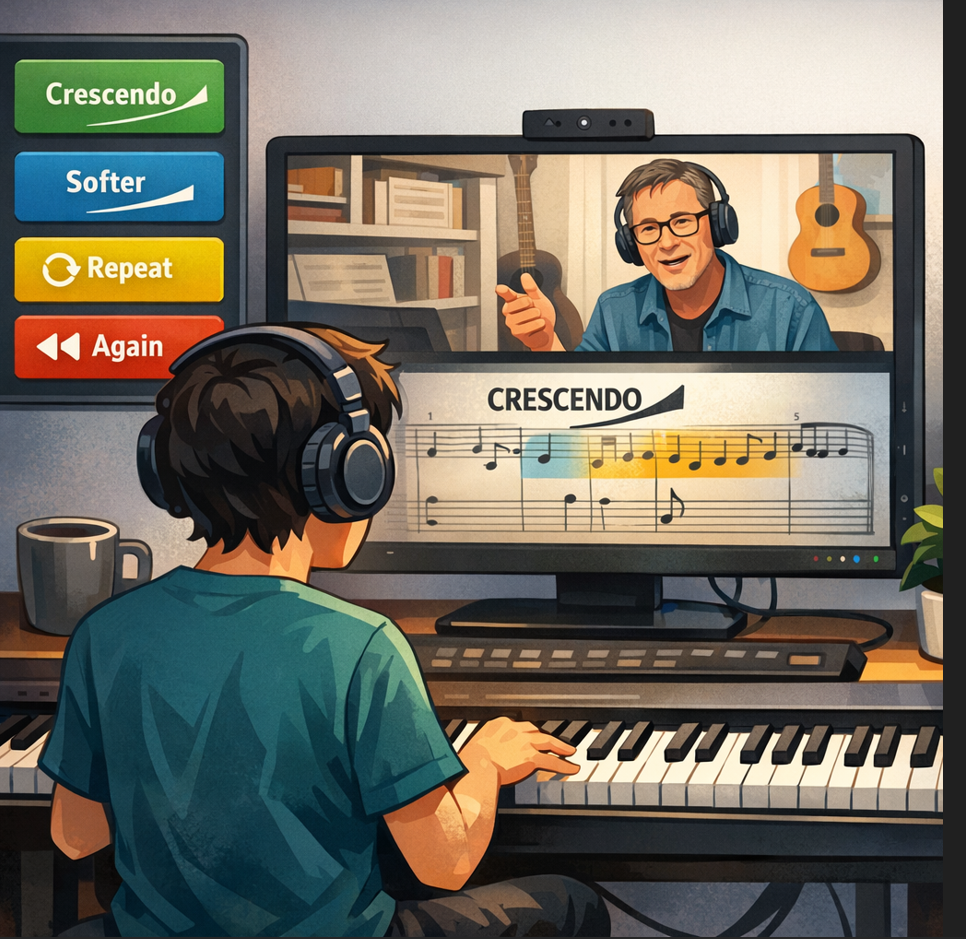
A visual command panel allows teachers to give real-time feedback during online music lessons without interrupting the student. By displaying cues like crescendo, softer, or repeat directly on the screen, students can adjust while playing--maintaining focus, flow, and musical continuity.
Valente Sabrioso ·
A Real Music Performance Opportunity for Students in Toronto
The North York Music Festival provides a supportive and structured music performance opportunity for students in Toronto. With constructive feedback, flexible participation options, and a calm environment, it helps students build confidence and grow through real performance experience.
Ella Poret ·
Why Sonatico is the Best Choice for Online Music Lessons
Discover why Sonatico stands out in online music education with personalized lessons, expert teachers, and flexible scheduling.
Administrator ·


Conversation
No comments yet. Start the conversation.
Join the conversation