
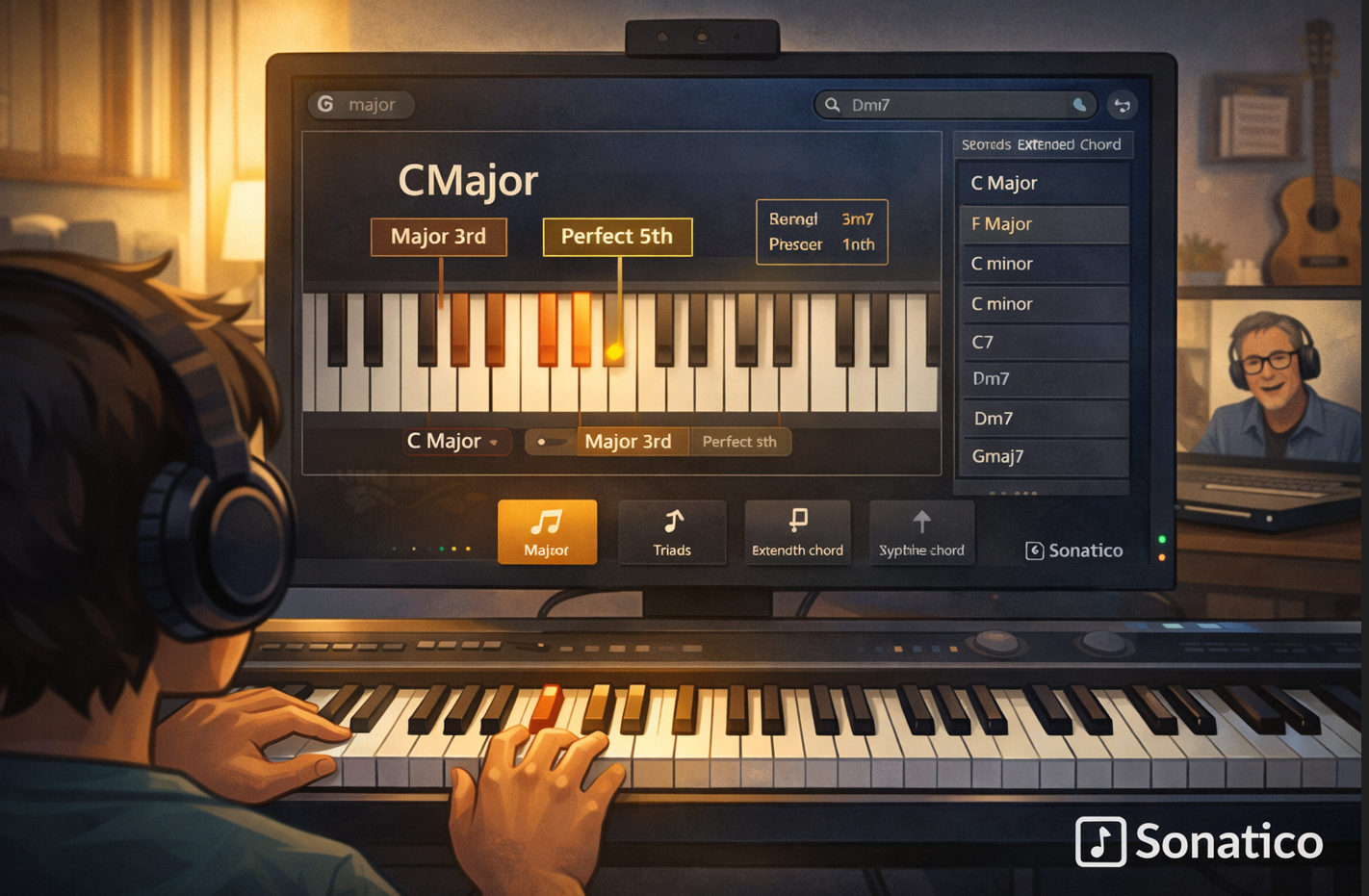
A Visual MIDI Keyboard for Learning Chords, Intervals, and Inversions
Published · Updated
A visual MIDI keyboard transforms how music theory is learned by showing notes, intervals, chords, and inversions in real time. Instead of memorizing, students can see and recognize patterns directly on the keyboard--making it easier to understand harmony, practice chord recognition, and develop real musical awareness.
Every teacher has faced this moment. You explain an interval. You show a chord on the piano.
The student understands it... briefly.
But a few minutes later, it's gone. Because music theory, when it's not visible, is hard to retain.
This is a common gap in music education. Students are trying to learn:
- piano chords
- chord inversions
- interval recognition
But most of the time, they rely on memory instead of actually seeing how music works on the keyboard.
What changes the experience is simple: a visual MIDI keyboard for music theory.When a MIDI keyboard is connected, every note played appears instantly on the screen.
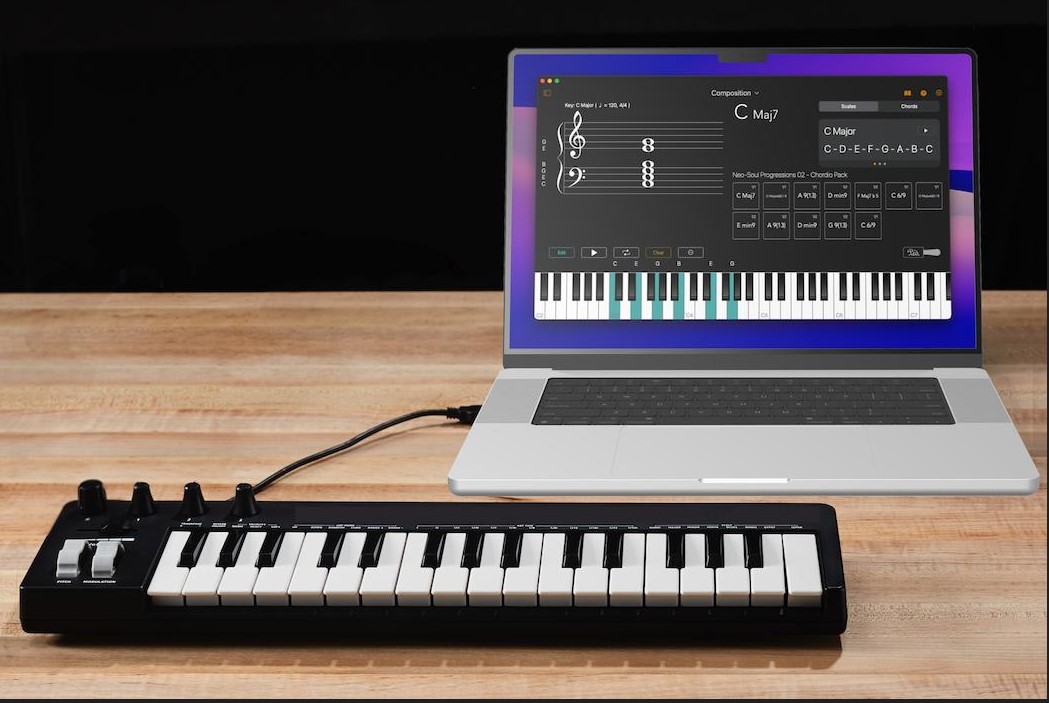
But more importantly, it doesn't just show notes.
It identifies:
- intervals between notes
- chord names (triads, seventh chords, extended chords)
- inversions (including 4-note chords and seventh chord inversions)
This turns abstract theory into something immediate. Students don't just hear chords -- they start to recognize chord structures and patterns visually.
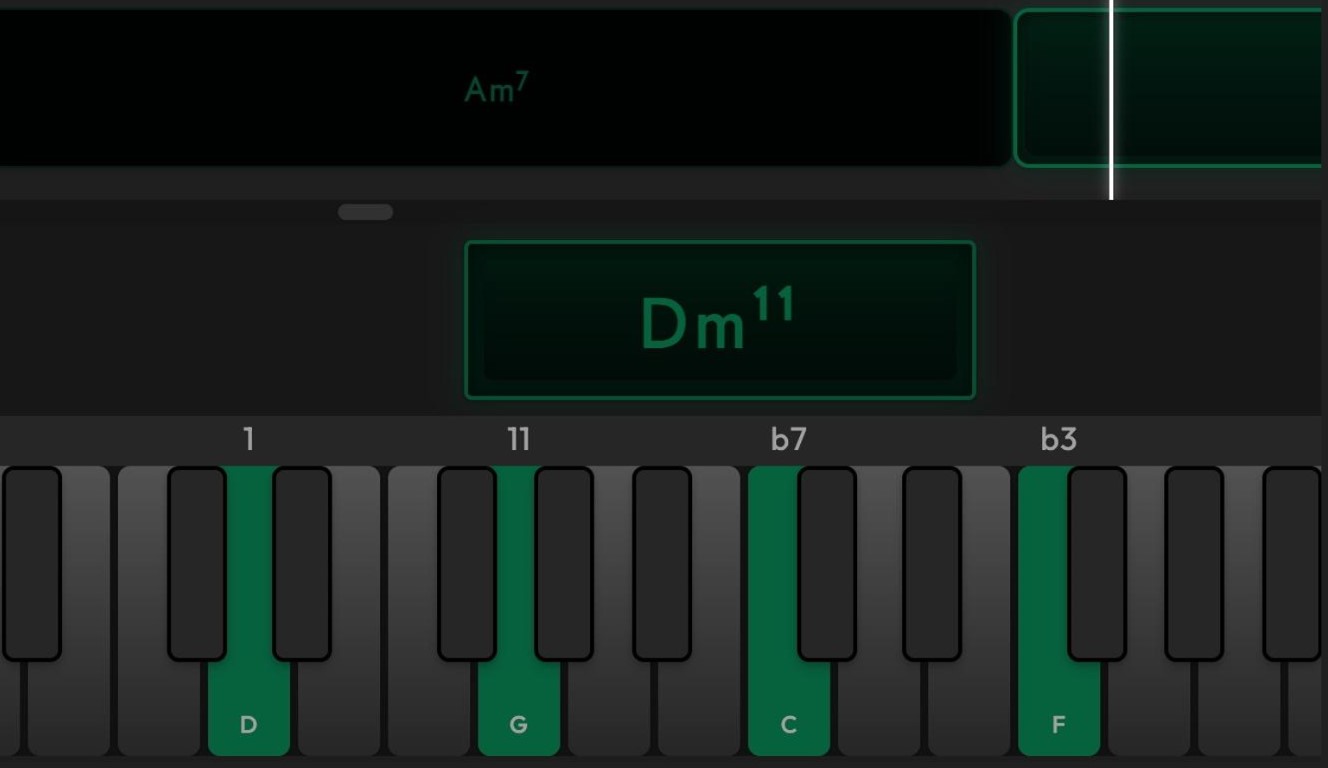
It also works as a search tool. You can type any chord -- and immediately see how it is played on the piano keyboard.This makes it much easier to:
- learn piano chords and inversions
- understand chord structure
- explore harmony without guessing
Then the dynamic changes.You can turn all labels off:
- no note names
- no chord names
Now it becomes a training environment. Play → identify → check.
This is where interval training and chord recognition actually develop. There is also an important musical layer. You are not limited to one piano sound. You can switch between:
- strings
- wind instruments
- synthesizers
This helps students hear harmony in different timbres -- which improves musical perception, not just theory knowledge.
On Sonatico, this kind of real-time MIDI keyboard visualization turns theory into something practical.
Not something to memorize later -- but something you can see, hear, and understand instantly.
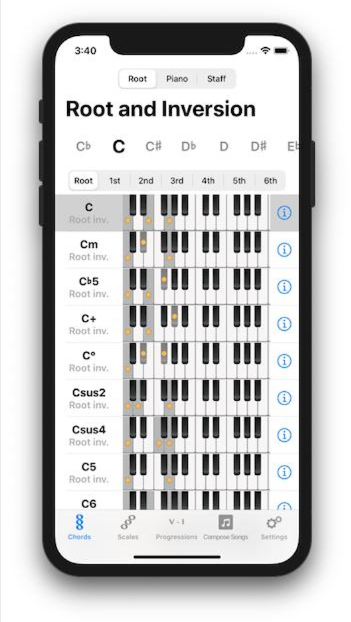
What this makes easier to learn
- piano chords and inversions
- interval recognition on keyboard
- seventh chords and 4-note chord structures
- real-time music theory using a MIDI keyboard
- visual understanding of harmony on piano
From explaining theory...to actually seeing how music works.
Related articles
Why Adults Quit Piano (And Why It Has Nothing To Do With Talent)
Most adults who quit piano assume they lack talent, but the real problem is often the learning process itself. Many students spend months practicing scales, exercises, and theory without experiencing the thing that motivated them to start: making music. When students connect learning to real musical experiences early, motivation becomes natural and progress accelerates. The issue is rarely talent. More often, it's the order in which music is taught.
Amanda Sulivan ·

Conversation
No comments yet. Start the conversation.
Join the conversation