
From Practice Room to Tour Van: What Playing the Violin in a Rock Band Taught Me
Published · Updated
A reflection on how performing with the rock band "Would You Kindly?" and engaging with local music communities revealed gaps in my traditional classical training. Broader musical exposure can better prepare students for diverse professional paths.
As a student, my understanding of what it meant to be a "professional" violinist was shaped almost entirely by a traditional classical training environment. After performing in a rock band and engaging more broadly with my local live music community, I've realized that local music communities often offer unique musical opportunities that can supplement and enhance a student's musical growth.
Within academic settings, musical community is largely built into the structure of the program. Outside of that environment, participation becomes a matter of individual initiative. Prior to joining a band, my own experience was almost exclusively confined to structured, institutionally organized events (mainly school orchestra concerts and private lesson studio recitals). I was largely unaware of informal performance spaces--open mics, local shows, collaborative projects--that have been meaningful avenues for artistic development and professional engagement for me now as a young adult. Exposure to these environments has been transformative--not only through performing experience, but also in fostering a sense of agency and ownership over my creative schedule, as well as providing networking opportunities. Engaging with local scenes, attending intimate performances at small venues, and forming connections with other musicians are all essential, yet rarely-emphasized aspects of professional development. These experiences have sustained my involvement in music beyond formal education. They've even deepened my engagement with my community beyond music.
Playing in a band highlighted significant gaps in my training, including electronic instruments, sound production, and stage setup/management. (I was quite humbled when my bandmates taught me how to set up my electric violin.) In a rock context, tone is shaped not only by physical technique, but also by electronic equipment like amplifiers and pedals. When I started playing in the band, I was a "tone purist" and had no interest in changing my sound. However, I learned that I could still sound like a violinist while exploring new tones and textures. Rather than existing in opposition to classical training, these artistic choices build upon it. They expand the expressive possibilities available to the performer. I've also learned about PA systems, sound boards, microphones, and speakers--knowledge that can be applied to any event sound, not just music events.
Classical education places a strong emphasis on interpretation within established frameworks. (I'd even say that orchestral settings discourage originality in section violinists.) In contrast, many contemporary performance settings require musicians to generate original material, make stylistic decisions, and adapt in real time. The shift from interpreter to improviser and composer has been one of the most significant developments in my musical skill set. Live improvisation has sharpened my working music theory--recall for finger patterns, chord progressions, scale degrees, and common tones has been vital for developing phrases and melodies within an open sonic field.
As I reflect on these experiences, I find myself considering how training environments might better prepare students for the breadth of musical careers available to them. This does not require abandoning traditional rigor or standards. Rather, it suggests the value of broadening the scope of exposure: introducing students to diverse performance contexts, encouraging independent exploration beyond prescribed pathways, and framing professional expectations in a way that is both accurate and constructive. Even small shifts--such as discussing alternative career models or incorporating contemporary performance practices--can have a meaningful impact on how students envision their future in music.
Related articles
A Real Music Performance Opportunity for Students in Toronto
The North York Music Festival provides a supportive and structured music performance opportunity for students in Toronto. With constructive feedback, flexible participation options, and a calm environment, it helps students build confidence and grow through real performance experience.
Ella Poret ·
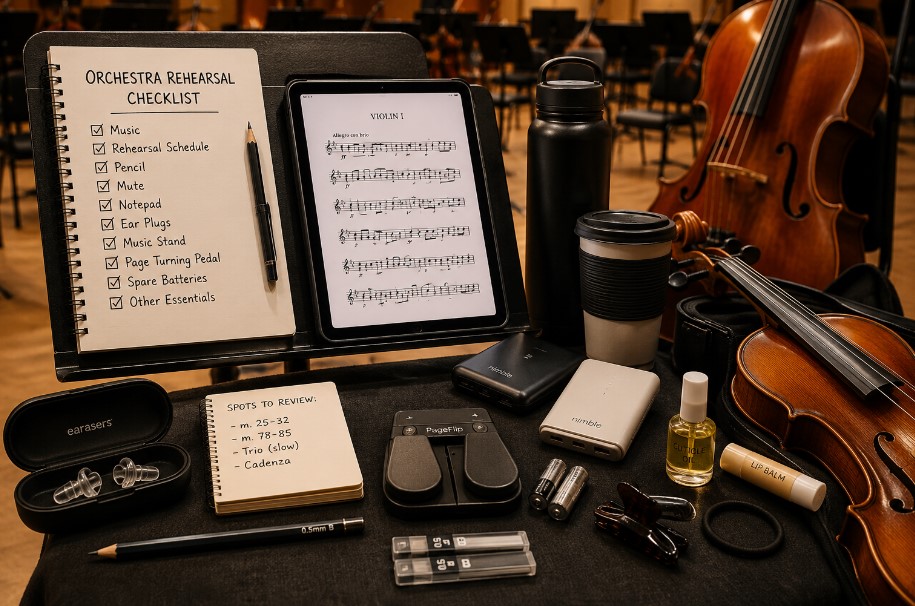
Orchestra Rehearsal Guide, Part I: What should I bring to rehearsal?
Most of my students started playing in orchestra classes, but some of them don't have orchestra classes available at their middle schools. When they join the high school orchestra, they're entering an established social group, often with inferred rules. I thought this information might be helpful for other young students as well.
Megan Weaver ·
Conversation
No comments yet. Start the conversation.
Join the conversation