
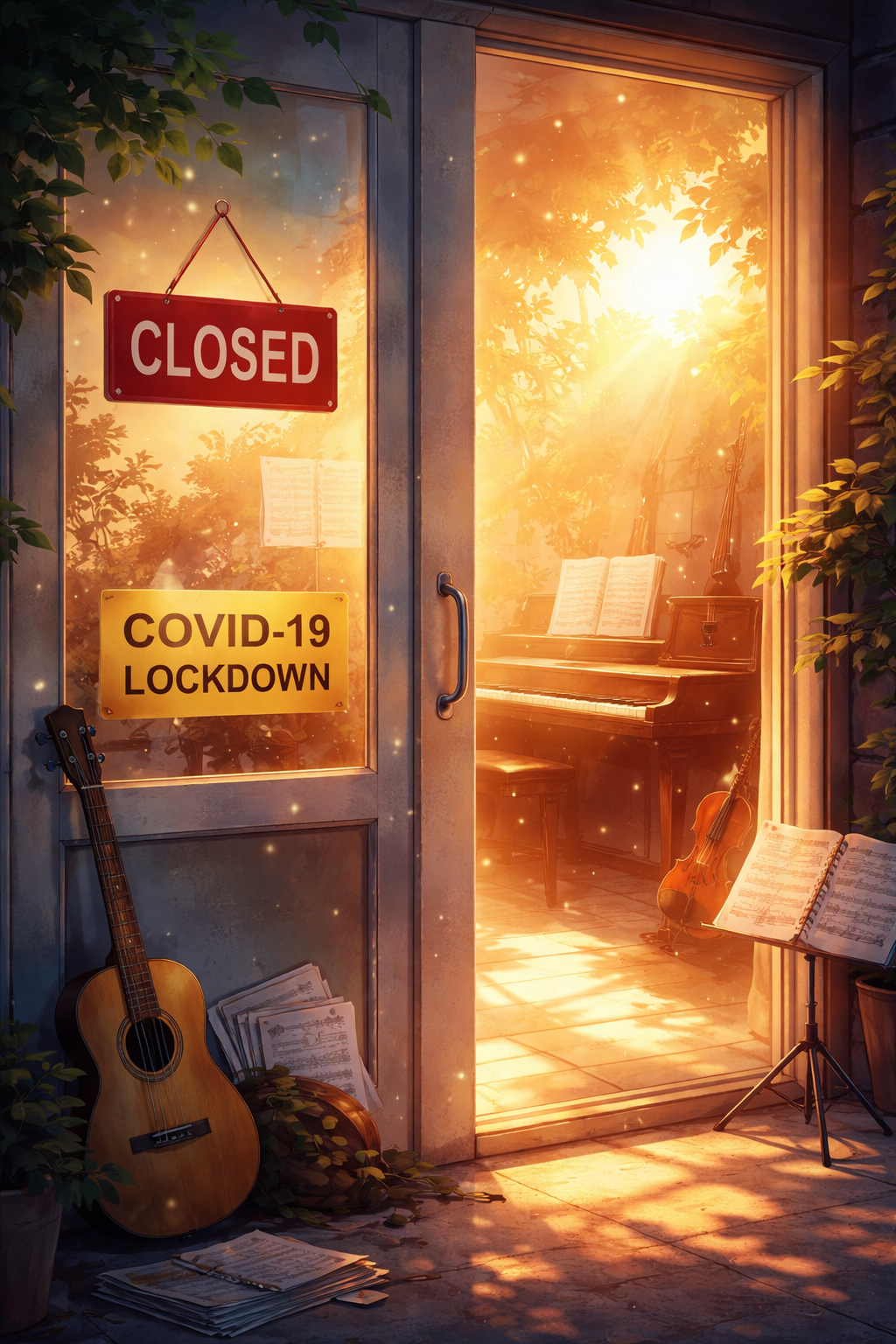
When Teaching Had to Change
Published
When the pandemic disrupted traditional music lessons, a challenge became an opportunity. This article reflects on how embracing limitations -- and turning "lemons into lemonade" -- can lead to meaningful change in teaching and learning.
When Teaching Suddenly Stopped Feeling Familiar
It's strange how quickly we forget how abrupt those months were.
One week, lessons were running as usual. The next, studios were closed, calendars wiped clean, and words like lockdown and restrictions quietly entered everyday conversations. In-person music lessons stopped -- not gradually, but all at once.Like many teachers during COVID, I tried to adapt without making a big deal of it. Online lessons seemed like the obvious temporary solution. I suggested them calmly, almost casually, assuming we would all return to normal soon.
But something felt off from the very beginning. Music isn't information that can simply be transferred through a screen. It lives in sound, in timing, in physical presence. It's the slight delay before a note, the tension in a shoulder, the breath taken too early. These things are easy to sense in a room -- and surprisingly difficult to catch online.
Parents sensed this too. Some were hesitant, some openly skeptical. Many simply didn't believe that music lessons could work in a virtual format. And honestly, at the time, I couldn't fully argue with them.
The problem wasn't resistance. The problem was that the tools weren't built for music. Online lessons felt fragile. Sound failed at the worst possible moments. I stopped students not because they were playing incorrectly, but because the connection broke. Explanations stretched longer, while playing shrank. Teaching slowly turned into managing interruptions.
At some point, it became clear: I was spending more energy compensating for the format than actually teaching. That realization led to a different kind of attention. I started observing my lessons more closely -- not to improve my teaching, but to understand where the process itself was breaking. When did students lose focus? When did sound matter more than words? When did technology get in the way instead of helping?
The idea that followed didn't feel ambitious. It felt practical. Together with a small team, we began building a setup designed specifically for music lessons. Clearer sound. Fewer disruptions. Simple tools that stayed in the background instead of demanding attention. Nothing revolutionary -- just respectful of how musicians actually work. When I introduced this new approach to parents, there were no promises. Only an invitation to try -- and to stop if it didn't feel right. I wasn't entirely sure myself. What happened next wasn't dramatic, but it was telling. My most dedicated students returned. We resumed exam preparation calmly, without urgency or pressure. Lessons became more focused, more musical. Not better than in-person lessons -- simply different, and unexpectedly effective.
By the time restrictions eased and studios reopened, something else had changed. A few students chose to continue online. Not out of necessity, but by preference. They had found a rhythm that worked for them.
That's when it became clear that this experience wasn't really about COVID, or technology, or even online learning. It was about paying attention when familiar methods stop working -- and allowing small, thoughtful adjustments instead of waiting for things to return exactly as they were. Nothing extraordinary happened. No breakthrough. Just a quiet shift that changed the direction of the work.
And sometimes, that's enough.
Related articles
Why Motivation Keeps Failing You
Motivation gets you started, but discipline is what turns goals into real results. Discover why lasting success in music, sports, health, business, and everyday life depends far more on consistent discipline than on temporary motivation.
Paul Mark ·
What Keeps a Musical Community Alive?
A reflection on the history of the Yukon Registered Music Teachers' Association and the people, relationships, and shared commitment that help musical communities endure across generations.
Administrator ·
Practice Doesn't Make Perfect: Why Consistency Matters More in Music
Many musicians grow up believing that "practice makes perfect," but perfection is a moving target that can leave people feeling permanently unprepared. Music is less like an exam and more like a language: its purpose is communication, expression, and connection. The musicians who stay with music for life are often not those chasing perfection, but those who consistently return to their instrument--even for ten minutes a day--and allow music to become part of everyday life.
Administrator ·


Conversation
No comments yet. Start the conversation.
Join the conversation