
What Keeps a Musical Community Alive?
Published
A reflection on the history of the Yukon Registered Music Teachers' Association and the people, relationships, and shared commitment that help musical communities endure across generations.
Recently, while reading about the history of the Yukon Registered Music Teachers' Association, I found myself thinking less about the organization itself and more about the people behind it.
The story begins in a fairly modest way. In the late 1960s, a small group of music teachers started gathering in one another's homes to share ideas, discuss teaching, organize recitals, and support each other's work. There was nothing particularly grand about it at the time. Like many worthwhile things, it simply began with a few people who cared enough to make the effort.
What struck me is that more than fifty years later, that spirit still seems to be present.
Students continue to perform. Teachers continue to learn from one another. Workshops, festivals, recitals, masterclasses, examinations, and community events continue to create opportunities for people to gather around music. Looking back across those decades, it becomes clear that none of this happens automatically.
Many organizations begin with enthusiasm and good intentions. Far fewer remain active for generations.
That realization led me to a simple question: what actually keeps a musical community alive?
At first, it is tempting to think about funding, facilities, programs, or even technology. All of those things matter. Yet when we look at communities that have endured over long periods of time, another pattern begins to emerge. Their strength rarely comes from infrastructure alone. More often, it comes from people who continue to invest their time, knowledge, and energy into something larger than themselves.
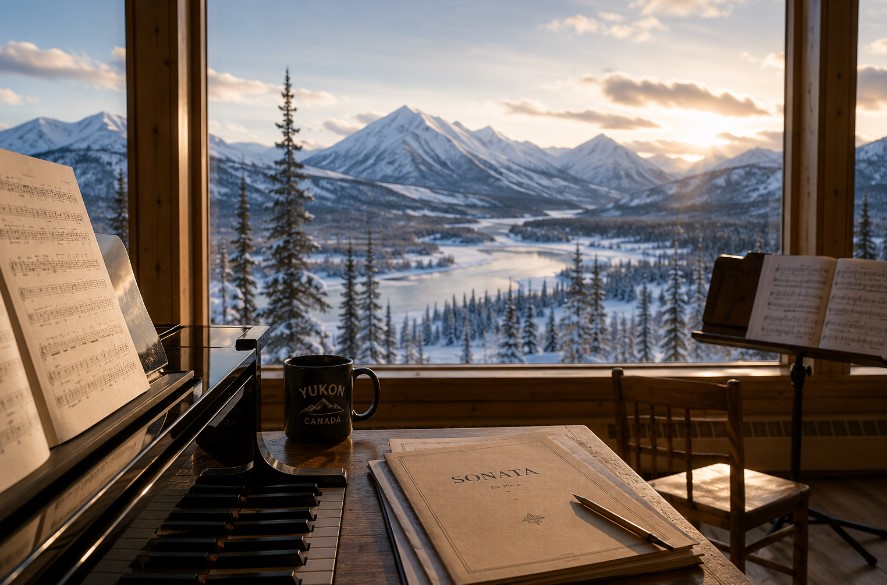
A view that reminds us why communities matter.
In music education, much of that work happens quietly.
It happens when a teacher encourages a student who is thinking about giving up. It happens when colleagues exchange ideas over coffee after a workshop. It happens when someone volunteers to organize a recital, mentor a younger teacher, or help create opportunities that may benefit students they will never personally teach.
None of these moments appear particularly significant on their own. Yet over time they accumulate, creating trust, continuity, and a sense of belonging. Eventually they become the foundation upon which an entire musical community rests.
The Yukon is often associated with independence and self-reliance, and rightly so. Yet reading through the history of the YRMTA, another quality seemed equally important: a willingness to come together around something that matters.
Yet reading through the history of the YRMTA, another quality seemed equally important: a willingness to come together around something that matters. Not because anyone is required to and not because there is a particular reward for doing so, but because music matters, students matter, and communities do not sustain themselves without people who are willing to contribute.
Perhaps that is one reason organizations like the YRMTA remain important. They remind us that music education has always been about more than lessons, examinations, or performances. It is also about mentorship, shared experience, professional generosity, and the passing of knowledge from one generation to the next.
Reading the history of the YRMTA reminded me that some questions remain relevant no matter how much the world changes: How is knowledge passed on? How do communities grow? And what helps music remain part of people's lives over time?
This reflection became part of a larger collection of conversations and observations about music education, teaching, and musical communities.
We've gathered some of those reflections here:
→ Research & Reflections
Related articles
Why Motivation Keeps Failing You
Motivation gets you started, but discipline is what turns goals into real results. Discover why lasting success in music, sports, health, business, and everyday life depends far more on consistent discipline than on temporary motivation.
Paul Mark ·
Practice Doesn't Make Perfect: Why Consistency Matters More in Music
Many musicians grow up believing that "practice makes perfect," but perfection is a moving target that can leave people feeling permanently unprepared. Music is less like an exam and more like a language: its purpose is communication, expression, and connection. The musicians who stay with music for life are often not those chasing perfection, but those who consistently return to their instrument--even for ten minutes a day--and allow music to become part of everyday life.
Administrator ·
The Truth About Zoom's Music Mode
Most musicians are told that turning on "Music Mode" in Zoom solves the problem of online music teaching. But Music Mode is not really a new technology built for music. In many ways, it simply reduces some of the speech-processing systems Zoom originally created for conversations. That may make music sound more natural -- but it does not solve the bigger issue: latency. And for musicians, latency affects far more than just "sync." It changes timing, reaction, phrasing, and the overall feeling of interaction between teacher and student. This article explores why online music still feels unnatural on general communication platforms -- and why reducing musical latency is a very different challenge from improving speech calls.
Administrator ·



Conversation
No comments yet. Start the conversation.
Join the conversation