
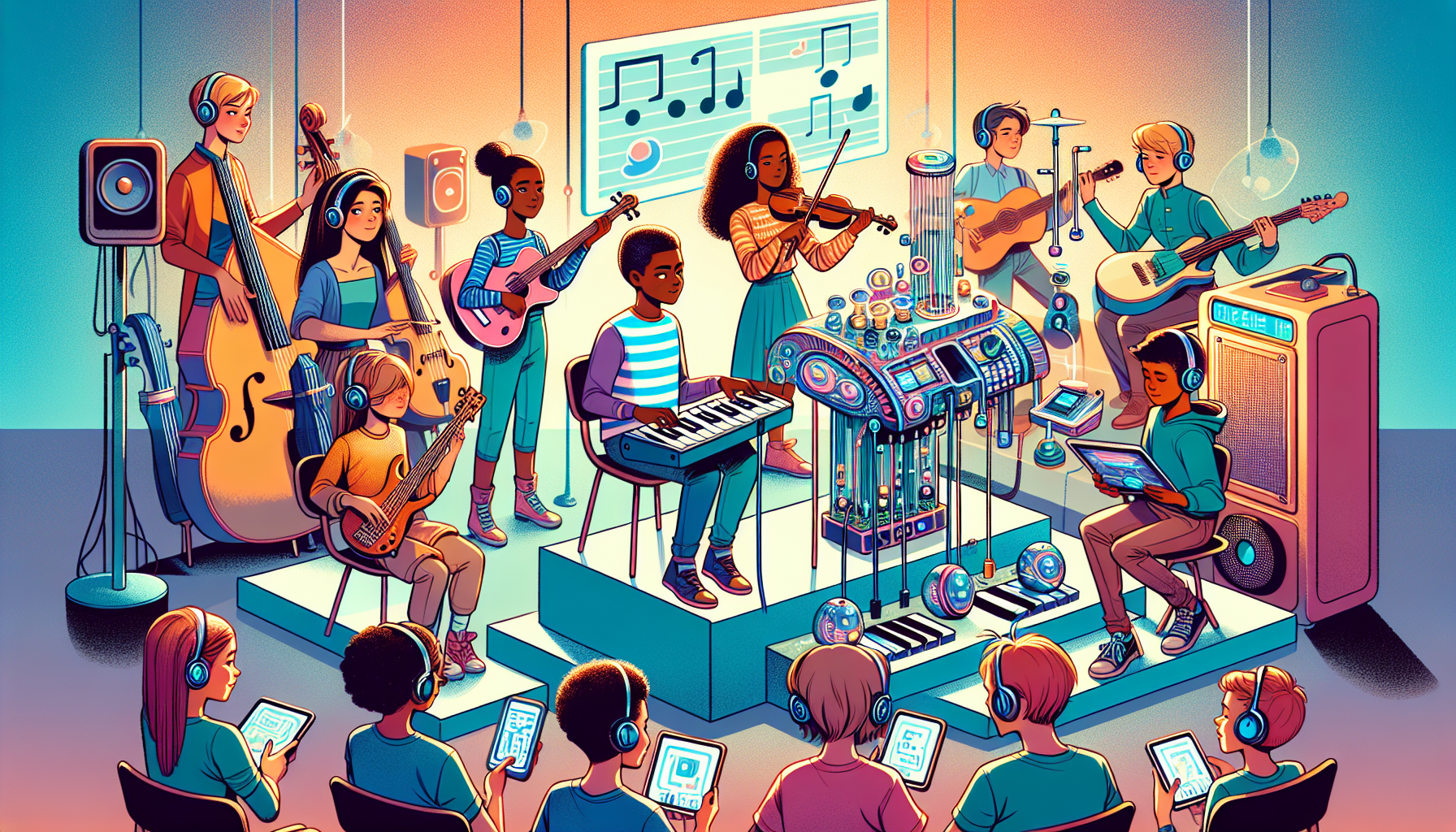
The Future of Music Education: Embracing Innovation and Technology
Published · Updated
Explore how innovation and technology are reshaping music education, offering new tools and opportunities for learners and educators alike.
Introduction
Music education has long been a cornerstone of cultural and personal development. As we move further into the digital age, educators and students alike are finding innovative ways to integrate technology into the learning process. This evolution not only enhances the educational experience but also makes music more accessible to a wider audience.
Technology in the Classroom
Technological advancements have significantly transformed traditional music classrooms. Interactive software programs allow students to compose, edit, and perform music without needing expensive instruments. These tools provide immediate feedback, helping learners improve their skills in real-time.
Moreover, virtual reality (VR) is gaining traction as a novel way to engage students. Imagine stepping into a virtual concert hall or orchestra pit--these immersive experiences can deepen understanding and appreciation for music.
Online Learning Platforms
In recent years, online platforms have revolutionized how music is taught and learned. Websites like Sonatico offer access to a plethora of resources from sheet music to instructional videos. These platforms connect students with teachers worldwide, facilitating personalized learning experiences that were once unimaginable.
AI-Powered Tutoring
Artificial Intelligence (AI) is another key player in modern music education. AI-driven applications can mimic one-on-one tutoring by identifying areas where students struggle and providing tailored exercises to address these challenges. Such personalized attention was previously limited to private lessons but is now available at scale.
The Role of Social Media
Social media platforms have become vibrant communities where musicians share their work, collaborate, and learn from one another. For students, this means exposure to diverse musical styles and cultures, broadening their horizons beyond what traditional curricula offer.
Challenges and Considerations
While technology offers many benefits, it also presents challenges. Educators must ensure that digital tools enhance rather than distract from learning objectives. Additionally, there is a risk of widening the gap between those with access to technology and those without.
The Path Forward
The future of music education lies in balancing innovation with tradition. By embracing new technologies while maintaining core educational principles, educators can provide enriching experiences that prepare students for the dynamic world of music.
If you're interested in exploring these cutting-edge methodologies further or finding a qualified teacher to guide you on your musical journey, consider visiting Sonatico.
Related articles
Why Music Teachers Should Remain Active Professional Musicians
The best music teachers never stop being musicians. Active performance enriches teaching, while teaching develops the skills that help musicians continue growing throughout their careers.
John Lettieri ·
Practice Doesn't Make Perfect: Why Consistency Matters More in Music
Many musicians grow up believing that "practice makes perfect," but perfection is a moving target that can leave people feeling permanently unprepared. Music is less like an exam and more like a language: its purpose is communication, expression, and connection. The musicians who stay with music for life are often not those chasing perfection, but those who consistently return to their instrument--even for ten minutes a day--and allow music to become part of everyday life.
Administrator ·
Why Adults Quit Piano (And Why It Has Nothing To Do With Talent)
Most adults who quit piano assume they lack talent, but the real problem is often the learning process itself. Many students spend months practicing scales, exercises, and theory without experiencing the thing that motivated them to start: making music. When students connect learning to real musical experiences early, motivation becomes natural and progress accelerates. The issue is rarely talent. More often, it's the order in which music is taught.
Amanda Sulivan ·


Conversation
No comments yet. Start the conversation.
Join the conversation