
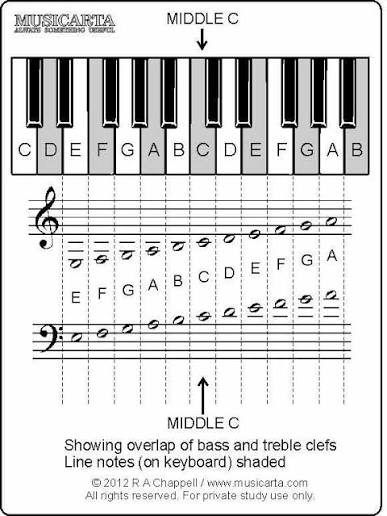
How to Teach Keyboard Geography to Beginners Without Flashcards or Memorization
Published
This document explains why beginner piano students should learn keyboard geography through tactile and spatial activities rather than flashcards or memorization. It argues that flashcards can help with note naming, but they separate notes from the physical experience of finding them on the keyboard. Instead, the document recommends embodied learning strategies that help students develop spatial awareness, pattern recognition, and muscle memory. Suggested activities include using black-key groups as landmarks, moving by intervals, finding repeated notes across the keyboard, and beginning sight-reading exercises by identifying tactile landmarks. The main idea is that students learn the keyboard more deeply when they feel and navigate it as a physical map, rather than simply memorizing note names. This approach is supported by research on tactile learning, haptic feedback, and embodied cognition, and it aims to build confidence, accuracy, and musical independence.
How to Teach Keyboard Geography to Beginners Without Flashcards or Memorization
Introduction
Traditional piano pedagogy often relies on visual aids such as flashcards to teach note recognition. While these tools can help students identify pitches, they rarely cultivate the spatial fluency necessary for confident navigation of the keyboard. Keyboard geography—the ability to locate notes and intervals by touch and spatial pattern—forms the foundation of musical literacy and performance. Recent research in tactile learning and embodied cognition suggests that kinesthetic engagement, rather than rote memorization, leads to deeper retention and musical understanding (Bobbe et al.; Hsiao et al.; Bhandarkar et al.).
The Limitations of Flashcard-Based Learning
Flashcards isolate notes from their musical and physical contexts. Students may recognize “C” visually but struggle to locate it quickly on the keyboard. This disconnect between visual recognition and tactile execution impedes fluency. As Hsiao et al. note, piano learning traditionally emphasizes imitation and auditory feedback but neglects tactile sensation—the physical feel of keys and intervals—which is crucial for developing motor memory (“Tactile Teacher”). Without tactile reinforcement, students rely on cognitive recall rather than embodied understanding, slowing their progress and increasing performance anxiety.
Tactile and Spatial Approaches to Keyboard Geography
Emerging pedagogical models emphasize embodied learning, where students engage multiple sensory modalities to internalize spatial relationships. Bobbe et al. propose that tactile interaction and multimodal feedback enhance motivation and comprehension in piano education (“Developing Technology Applications for Piano Teaching and Learning”). Teachers can apply these principles without technology by focusing on tactile mapping exercises:
- Black-key anchoring: Students identify groups of two and three black keys as landmarks, then locate surrounding white keys by pattern.
- Interval navigation: Instead of naming notes, students move by intervals—“up a third,” “down a fifth”—to build spatial awareness.
- Landmark drills: Students find all instances of a specific note (e.g., all Fs) across the keyboard, reinforcing pattern recognition through repetition.
These exercises transform the keyboard from a memorized chart into a navigable landscape.
Integrating Tactile Learning into Daily Practice
Research on passive haptic learning supports the integration of tactile cues into regular practice. Bhandarkar et al. demonstrate that haptic reinforcement—whether through wearable devices or guided touch—accelerates learning and reduces cognitive load (“Learning Piano Songs with Passive Haptic Training”). Teachers can adapt this concept by incorporating short, patterned sight‑reading excerpts, such as those found in Level 4 sight‑reading tests, to reinforce geography through repetition. Each exercise begins with identifying tactile landmarks before playing, encouraging students to feel their way through the keyboard rather than rely on visual recall.
From Memorization to Muscle Memory
The ultimate goal of keyboard geography instruction is muscle memory: the ability to navigate the keyboard instinctively. When students learn through tactile and spatial engagement, they internalize the keyboard’s structure as a physical map. This approach aligns with embodied cognition theories, which posit that motor and sensory experiences are integral to conceptual understanding. By shifting from memorization to exploration, teachers empower students to play with confidence, accuracy, and musicality.
Conclusion
Teaching keyboard geography without flashcards fosters a deeper, more intuitive connection between students and their instrument. Grounded in tactile pedagogy and supported by empirical research, this method transforms piano learning from a visual exercise into a full‑body experience. As educators integrate tactile mapping and interval‑based drills into their lessons, they cultivate not only technical skill but also artistic freedom—helping students know the keyboard as they feel it.
Works Cited
- Bhandarkar, Asha, et al. “Learning Piano Songs with Passive Haptic Training: an Interactive Lesson.” Proceedings of the 2022 ACM International Joint Conference on Pervasive and Ubiquitous Computing (UbiComp/ISWC '22 Adjunct), ACM Digital Library, 2022, doi:10.1145/3544793.3560321.
- Bobbe, Tina, et al. “What Early User Involvement Could Look Like—Developing Technology Applications for Piano Teaching and Learning.” Multimodal Technologies and Interaction, vol. 5, no. 7, 2021, doi:10.3390/mti5070038.
- Hsiao, Chih‑Pin, et al. “Tactile Teacher: Sensing Finger Tapping in Piano Playing.” Proceedings of the Ninth International Conference on Tangible, Embedded, and Embodied Interaction, ACM Digital Library, 2015, doi:10.1145/2677199.2680554.
Related articles
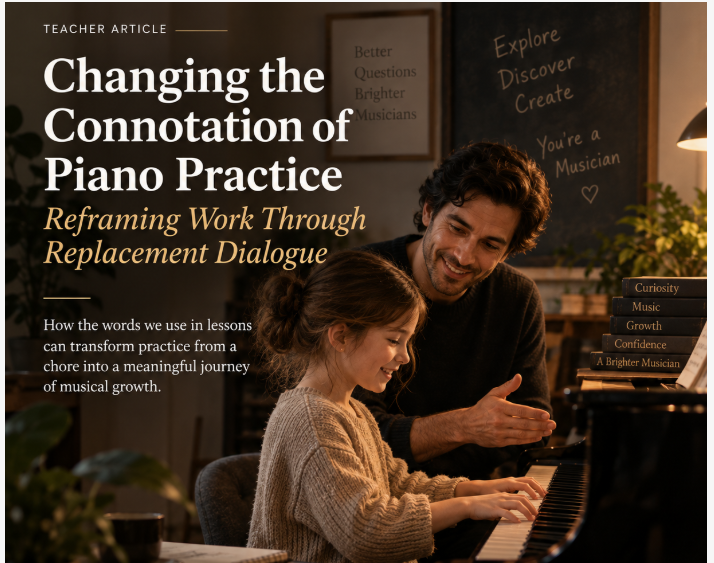
Changing the Connotation of Piano Practice
Many students think of piano practice as something they have to do. But often it isn't the practice itself that creates resistance--it's the way we talk about it. This article explores how piano teachers can use simple changes in language to make piano practice feel more meaningful, enjoyable, and motivating. By replacing directive phrases with language that encourages curiosity, ownership, and musical discovery, teachers can maintain high standards while helping students build confidence and a lifelong love of music.
Justin Vidad-Menezes ·
Rebuilt Steinway Pianos: Trademark Policies, Decals, and Questions of Fair Competition
When a genuine Steinway piano is rebuilt with replacement or aftermarket parts, can it still be described and sold as a Steinway? This article examines Steinway & Sons' trademark rights, its 2018 policy concerning Steinway decals and rebuilt pianos, and the concerns raised by the Piano Technicians Guild about independent piano rebuilders and fair competition. The central issue is the difference between protecting consumers from misleading branding and controlling how an authentic Steinway piano may be restored, serviced, and described. The article argues that clear disclosure--explaining that a piano has been rebuilt, identifying who completed the work, and accurately describing its replacement parts--offers a more balanced approach for manufacturers, rebuilders, and buyers.
Justin Vidad-Menezes ·
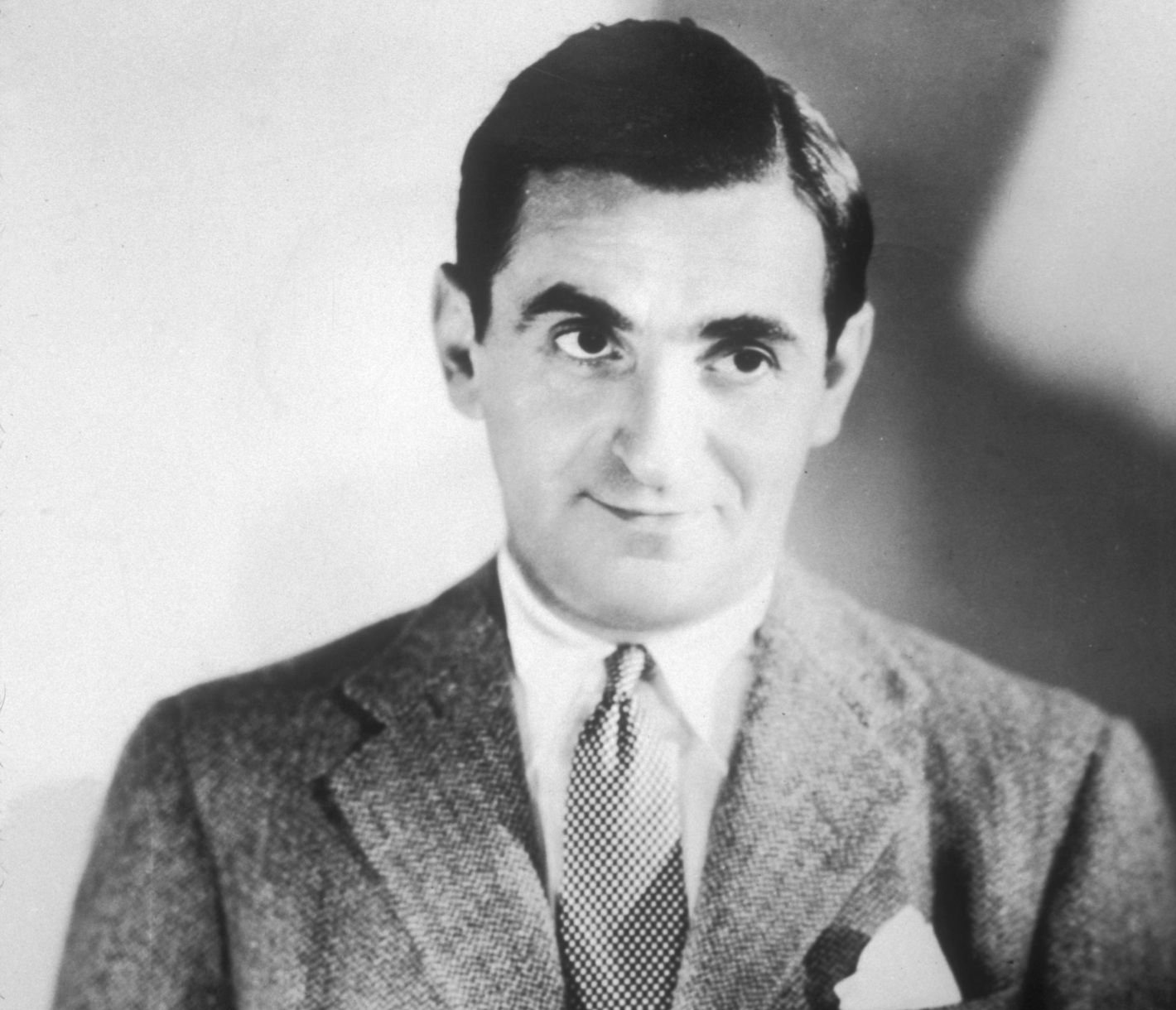
Irving Berlin and the Importance of Developing the Ear in Music
Who Irving Berlin Was (and why he matters): Russian-born American composer and lyricist, active from 1907-1971. Wrote an estimated 1,500 songs, including White Christmas, God Bless America, Blue Skies, Cheek to Cheek, and Puttin' on the Ritz. His music forms a major part of the Great American Songbook. Received an Academy Award, Grammy, Tony, and the Presidential Medal of Freedom. Wrote an estimated 1,500 songs, including White Christmas, God Bless America, Blue Skies, Cheek to Cheek, and Puttin' on the Ritz. His music forms a major part of the Great American Songbook. Received an Academy Award, Grammy, Tony, and the Presidential Medal of Freedom.
Justin Vidad-Menezes ·

Conversation
No comments yet. Start the conversation.
Join the conversation