

Irving Berlin and the Importance of Developing the Ear in Music
Published
Who Irving Berlin Was (and why he matters): Russian-born American composer and lyricist, active from 1907-1971. Wrote an estimated 1,500 songs, including White Christmas, God Bless America, Blue Skies, Cheek to Cheek, and Puttin' on the Ritz. His music forms a major part of the Great American Songbook. Received an Academy Award, Grammy, Tony, and the Presidential Medal of Freedom. Wrote an estimated 1,500 songs, including White Christmas, God Bless America, Blue Skies, Cheek to Cheek, and Puttin' on the Ritz. His music forms a major part of the Great American Songbook. Received an Academy Award, Grammy, Tony, and the Presidential Medal of Freedom.
Irving Berlin remains one of the most compelling examples of how a finely developed musical ear can shape a lifetime of creativity and artistic influence. Born in Russia and raised in the United States, Berlin became one of the most significant composers and lyricists of the twentieth century. His catalogue of more than 1,500 songs includes enduring works such as White Christmas, God Bless America, Blue Skies, and Cheek to Cheek. His contributions form a major part of the Great American Songbook, and his achievements earned him honors including an Academy Award, a Grammy, a Tony, and the Presidential Medal of Freedom.
What distinguishes Berlin from many of his contemporaries is not only the breadth of his output but the way he created it. Berlin could not read or write music in the traditional sense. Instead, he relied almost entirely on ear training and listening skills -- listening, absorbing, imitating, and shaping musical ideas internally before dictating them to assistants who notated them. His primary instrument was a custom transposing piano that allowed him to play everything in the key of F-sharp, the key he found most comfortable. Rather than limiting him, this constraint sharpened his auditory imagination and forced him to rely on the most powerful musical tool he possessed: his ear.
Berlin's story illustrates why developing the ear in music is not merely an enrichment activity but a foundational component of musicianship. A strong ear allows students to internalize melody, harmony, rhythm, and style long before they can analyze them on the page. It fosters musical independence -- the ability to hear what one intends to play, to self-correct, to shape phrases naturally, and to understand music as a living language rather than a set of symbols.
For teachers, Berlin's example underscores the importance of balancing notation-based instruction with intentional ear training in music education. Students who listen deeply become more expressive, confident, and creative. They memorize more naturally, improvise more freely, and develop a sense of musical intuition that cannot be taught through reading alone. Learning music by ear also supports technique: students who listen for tone, balance, and phrasing tend to play with greater control and artistry.
In a music education landscape that often prioritizes visible progress on the page, Berlin reminds us that some of the most profound musical growth happens internally. His legacy invites teachers to cultivate listening as a central pillar of instruction and encourages students to trust their ears as much as their eyes. Irving Berlin's career demonstrates that a well-developed ear can unlock a lifetime of musical expression, creativity, and connection.
Source: https://www.britannica.com/biography/Irving-Berlin
Related articles
Changing the Connotation of Piano Practice
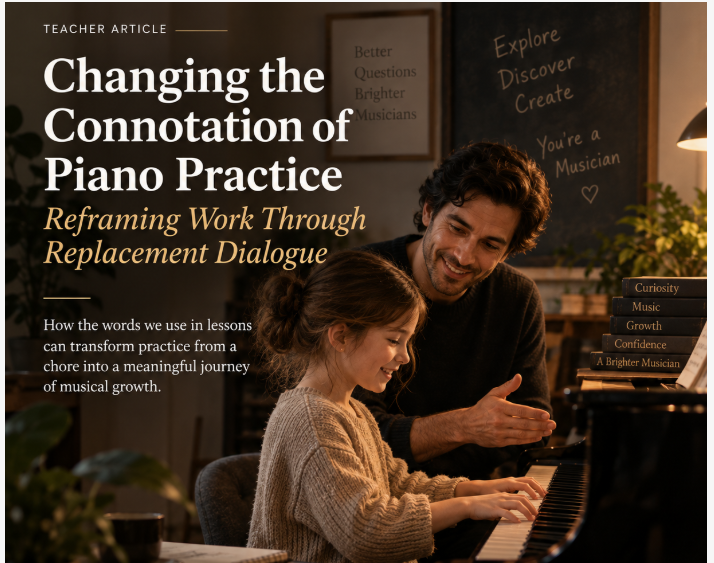
Many students think of piano practice as something they have to do. But often it isn't the practice itself that creates resistance--it's the way we talk about it. This article explores how piano teachers can use simple changes in language to make piano practice feel more meaningful, enjoyable, and motivating. By replacing directive phrases with language that encourages curiosity, ownership, and musical discovery, teachers can maintain high standards while helping students build confidence and a lifelong love of music.
Justin Vidad-Menezes ·
Rebuilt Steinway Pianos: Trademark Policies, Decals, and Questions of Fair Competition
When a genuine Steinway piano is rebuilt with replacement or aftermarket parts, can it still be described and sold as a Steinway? This article examines Steinway & Sons' trademark rights, its 2018 policy concerning Steinway decals and rebuilt pianos, and the concerns raised by the Piano Technicians Guild about independent piano rebuilders and fair competition. The central issue is the difference between protecting consumers from misleading branding and controlling how an authentic Steinway piano may be restored, serviced, and described. The article argues that clear disclosure--explaining that a piano has been rebuilt, identifying who completed the work, and accurately describing its replacement parts--offers a more balanced approach for manufacturers, rebuilders, and buyers.
Justin Vidad-Menezes ·
How to Teach Keyboard Geography to Beginners Without Flashcards or Memorization
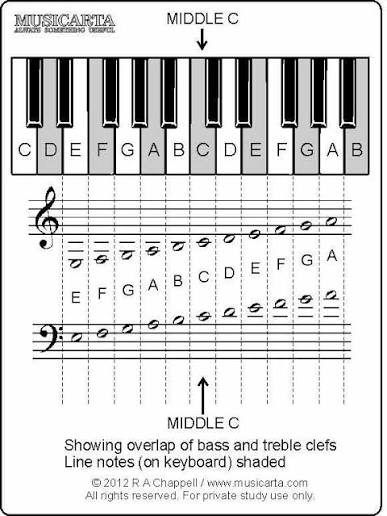
This document explains why beginner piano students should learn keyboard geography through tactile and spatial activities rather than flashcards or memorization. It argues that flashcards can help with note naming, but they separate notes from the physical experience of finding them on the keyboard. Instead, the document recommends embodied learning strategies that help students develop spatial awareness, pattern recognition, and muscle memory. Suggested activities include using black-key groups as landmarks, moving by intervals, finding repeated notes across the keyboard, and beginning sight-reading exercises by identifying tactile landmarks. The main idea is that students learn the keyboard more deeply when they feel and navigate it as a physical map, rather than simply memorizing note names. This approach is supported by research on tactile learning, haptic feedback, and embodied cognition, and it aims to build confidence, accuracy, and musical independence.
Justin Vidad-Menezes ·

Conversation (1)
Join the conversationPaul
One reason Irving Berlin's story resonates with me is that it reminds us that great musicianship is not built only through reading notes. Throughout my teaching career, I have found that students who learn to listen carefully often develop stronger musical instincts, better memory, and greater independence. Technique and theory matter, but the ear remains one of the most important tools a musician can develop.