
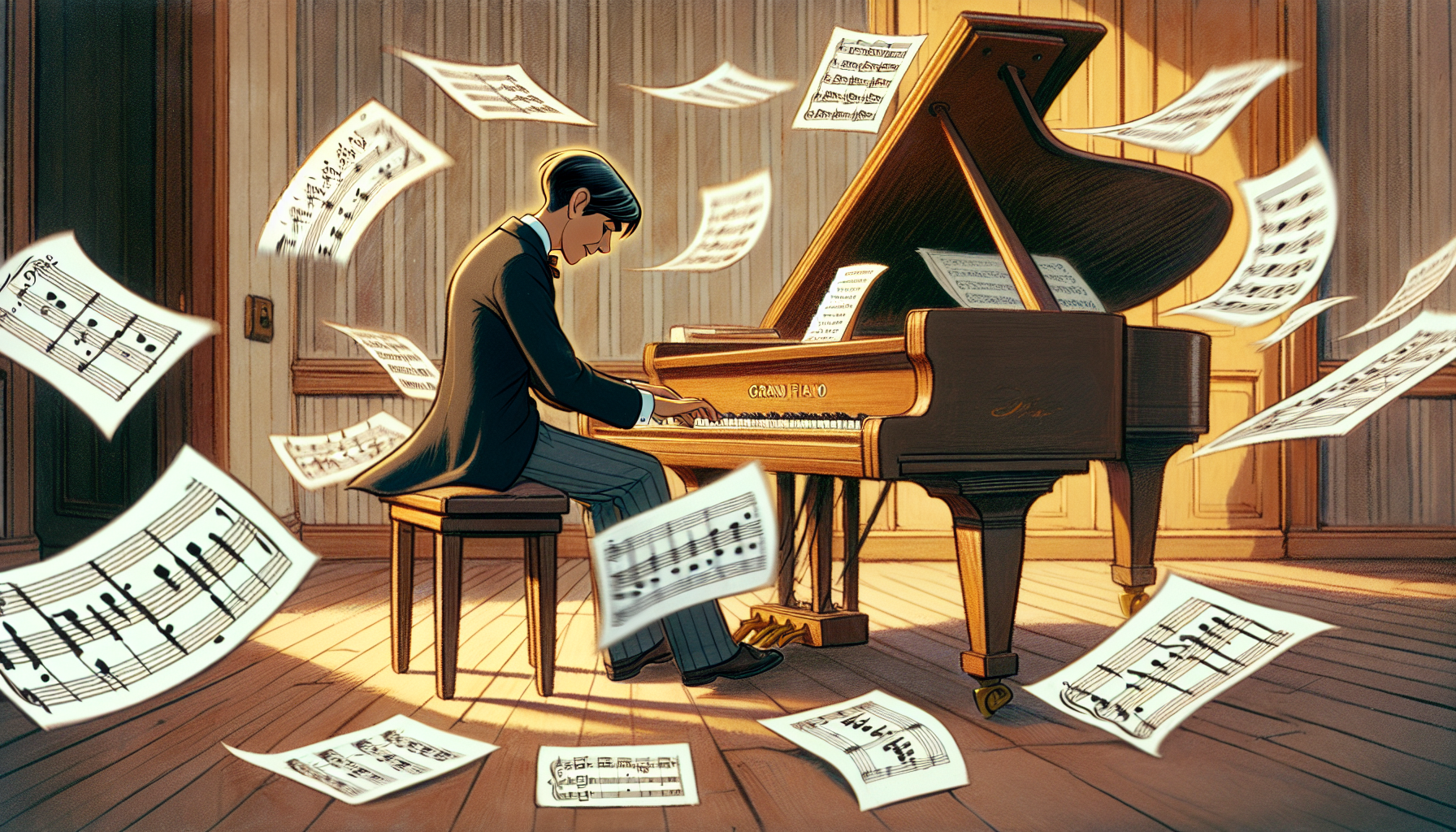
Mastering Chord Inversions: The Secret to Effortless Piano Playing
Published
Discover how chord inversions can transform your piano playing by enabling smoother transitions and boosting confidence.
Unveiling the Power of Chord Inversions
For many beginners, learning to play the piano can be a daunting task, especially when navigating chord progressions. Often overlooked, yet immensely transformative, is the skill of using chord inversions. This technique holds the key to unlocking a more fluid and expressive playing style.
Why Chord Inversions Matter
Imagine trying to play your favorite song, but your hands feel like they're in a constant race across the keyboard. This common struggle arises from playing chords in their root position--the basic formation of notes that requires significant hand movement. However, seasoned players know that there's a smarter approach.
Chord inversions allow you to rearrange the notes within a chord, enabling you to keep your hands in one place while transitioning smoothly between chords. This technique not only reduces movement but also enhances your ability to maintain consistent rhythm and musicality.
Simplifying Common Progressions
Take a typical chord progression like C, G, Am, F. When played in root position, each transition demands a leap across the keys, often resulting in clunky and disjointed sounds. By employing inversions, you can rearrange these chords so that your fingers glide effortlessly from one to the next.
- C Major: Start with the root position (C-E-G), then try the first inversion (E-G-C) or second inversion (G-C-E) to see how it affects your hand placement.
- G Major: Transition to G Major's first inversion (B-D-G) from C's second inversion for a smoother shift.
- A Minor: Use A Minor's first inversion (C-E-A) for minimal movement from G Major.
- F Major: Finally, try F Major's first inversion (A-C-F) for an easy switch from A Minor.
This strategic use of inversions allows you to stay within a comfortable range on the keyboard, making your playing feel more cohesive and professional.
A Skill Worth Mastering
The impact of mastering chord inversions cannot be overstated. Besides achieving cleaner transitions and maintaining rhythm integrity, you'll find that even simple songs become more enjoyable and less intimidating. Your confidence will naturally increase as you witness noticeable improvements in your playing style.
If you've been feeling stuck or frustrated with your progress on the piano, learning chord inversions might just be the breakthrough you need. It's a pivotal part of our curriculum at Sonatico, where we guide aspiring musicians from beginner to proficient players efficiently and enjoyably.
Your Next Steps
If you're ready to transform your piano journey and embrace this game-changing skill, start exploring chord inversions today. With consistent practice and guidance from experienced instructors, you'll move from novice to confidently playing your favorite tunes in no time. To learn more about how we can support your musical growth, visit our website or search for qualified teachers who can assist you on this exciting path.
Find a TeacherRelated articles
Why Music Teachers Should Remain Active Professional Musicians
The best music teachers never stop being musicians. Active performance enriches teaching, while teaching develops the skills that help musicians continue growing throughout their careers.
John Lettieri ·
Practice Doesn't Make Perfect: Why Consistency Matters More in Music
Many musicians grow up believing that "practice makes perfect," but perfection is a moving target that can leave people feeling permanently unprepared. Music is less like an exam and more like a language: its purpose is communication, expression, and connection. The musicians who stay with music for life are often not those chasing perfection, but those who consistently return to their instrument--even for ten minutes a day--and allow music to become part of everyday life.
Administrator ·
Why Adults Quit Piano (And Why It Has Nothing To Do With Talent)
Most adults who quit piano assume they lack talent, but the real problem is often the learning process itself. Many students spend months practicing scales, exercises, and theory without experiencing the thing that motivated them to start: making music. When students connect learning to real musical experiences early, motivation becomes natural and progress accelerates. The issue is rarely talent. More often, it's the order in which music is taught.
Amanda Sulivan ·

Conversation
No comments yet. Start the conversation.
Join the conversation